

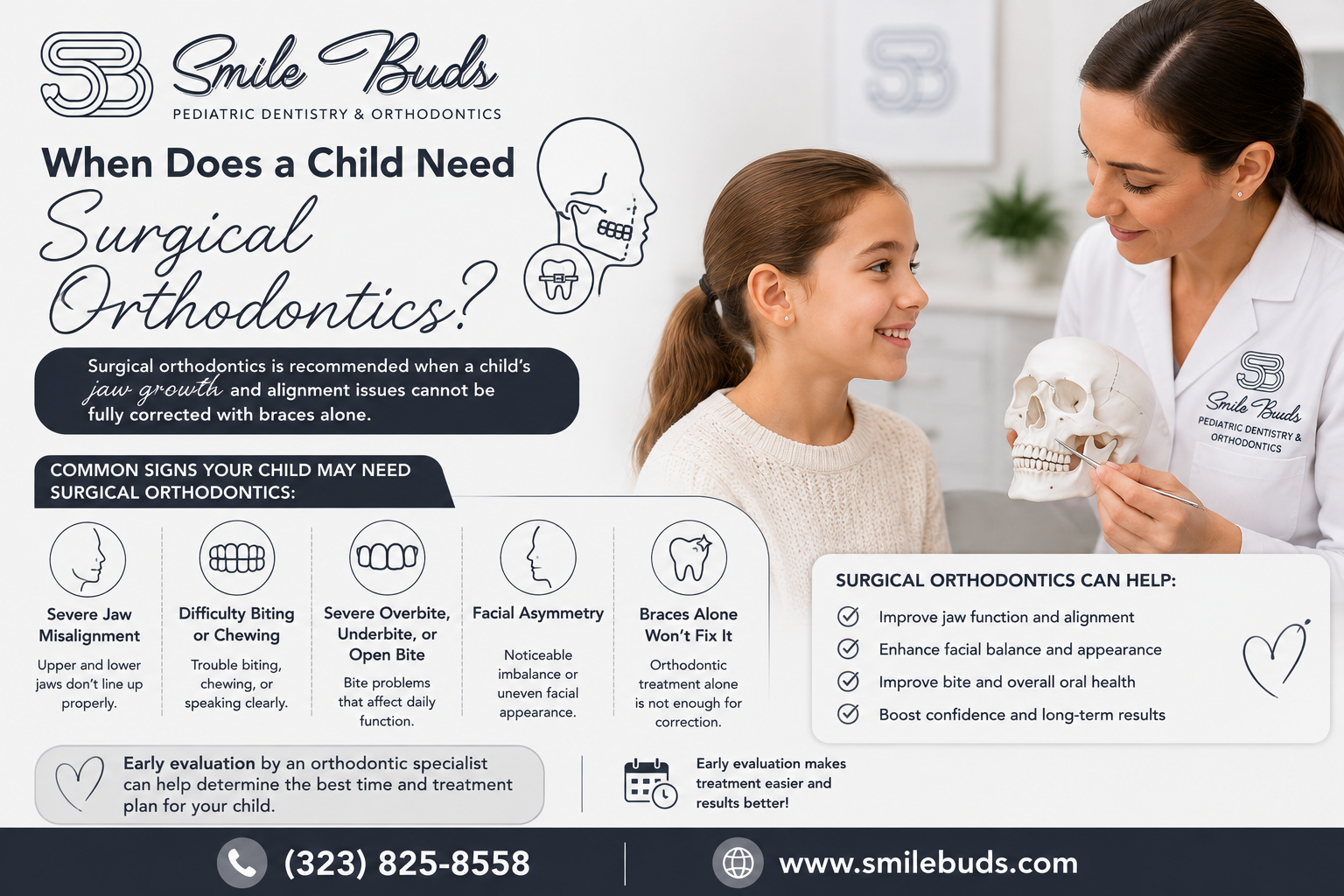
When Does a Child Need Surgical Orthodontics?
Most kids never need surgical orthodontics. But it may be recommended for severe jaw misalignment, significant bite problems, or skeletal issues that braces alone can’t correct. This kind of orthodontic surgery is typically considered once jaw growth is mostly complete, usually in the teenage years.
If your children’s orthodontist has mentioned that they might need jaw surgery in the future, it is natural to feel a little overwhelmed. The good news is that surgical treatment is rare. It is generally reserved for a small percentage of pediatric orthodontic cases. This article explains when surgery is necessary and what conditions normally require it. It also explains how early orthodontic treatment might sometimes help kids avoid it entirely.
When Does a Child Need Surgical Orthodontics?
When a child’s jaw growth causes severe skeletal misalignment, surgical orthodontics may be required. Braces for children or orthodontic appliances alone cannot fix this condition. This usually means major differences in the size or position of the upper and lower jaws, rather than just crowded or crooked teeth.
Most kids using child braces never need this kind of intervention. Surgery becomes relevant for severe bite problems and abnormal jaw growth. These problems may affect chewing, speech, breathing, and facial balance.
What’s the Difference Between Regular Orthodontics and Orthodontic Surgery?
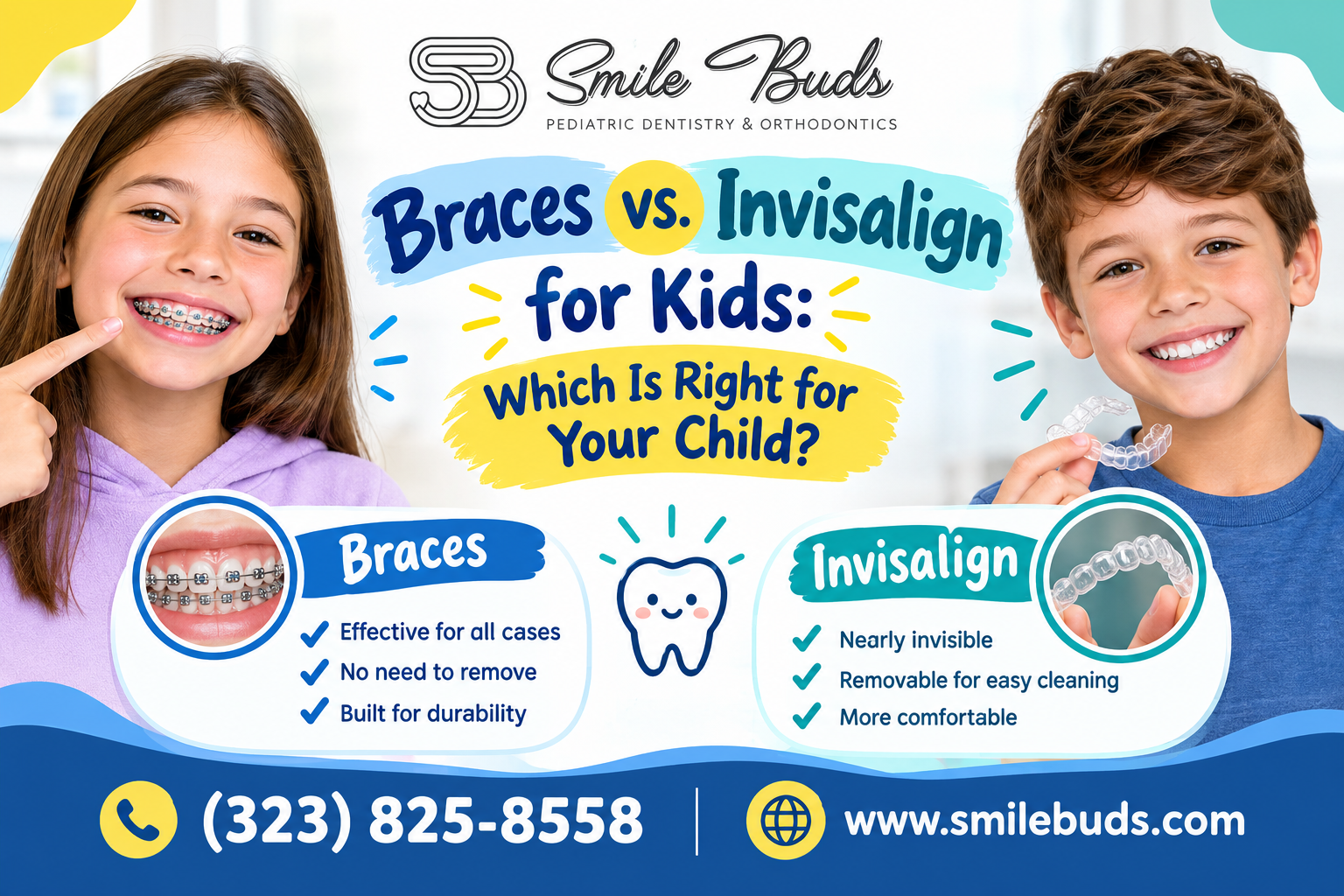
Regular orthodontics for kids focuses on shifting teeth with braces or clear aligners. These treatments slowly move them into better alignment over months or years. This method works well for most crowding, spacing, and mild-to-moderate bite issues.
However, corrective jaw surgery physically repositions the jawbone itself. No matter how long treatment lasts, it treats skeletal issues that braces cannot fix. Usually, an oral and maxillofacial surgeon performs this procedure. They often work closely with a pediatric orthodontist before and after surgery.
What Conditions Require Corrective Jaw Surgery in Kids?
A few specific conditions can warrant a shift from standard braces to surgical options.
Severe Overbite or Underbite
In addition to tooth position, differences in jaw size can cause a significant overbite or underbite. In these cases, surgical correction is often needed. These situations usually have real functional issues, such as difficulty biting into food or chewing comfortably.
Crossbite and Open Bite
A severe crossbite or open bite can change how the teeth fit together in the mouth. This can cause uneven wear or jaw strain. When these patterns are caused by skeletal imbalance, surgery may be the only effective long-term solution.
Impacted or Severely Crowded Teeth
Extremely crowded teeth or impacted teeth may mean a jaw that is too small to support a full, healthy smile. In some cases, jaw surgery makes the space needed for proper bite correction and long-term stability.
Jaw Development Problems
One Jaw development problem is that one jaw grows faster or in a different direction than the other. This might cause visible facial growth abnormalities and asymmetry. These dental and skeletal problems can become more obvious after a child reaches their teenage growth spurt.
Who Performs Surgical Orthodontics for Children?
Your orthodontist for children and an oral and maxillofacial surgeon work together to perform surgical orthodontics. The surgeon specializes in jaw alignment procedures. The orthodontist usually manages braces before and after surgery. Meanwhile, the surgeon is doing the actual jaw repositioning.
This collaborative approach ensures that complex orthodontic cases get the specialist care they need at every stage. It includes everything from the first evaluation to months of post-surgical adjustment and monitoring.
At What Age Is Jaw Surgery Typically Considered?
Surgical orthodontics is usually delayed until jaw growth is nearly complete or fully complete. For girls, this normally happens between the ages of 16 and 18, and for boys, slightly later. Operating before growth is complete increases the risk that the jaw will continue to shift after surgery. This may reverse the correction.
Meanwhile, orthodontists often use braces or other tools to prepare the teeth and manage pediatric orthodontic treatment in the years leading up to surgery. This helps to ensure that everything is ready when the time is right.
Can Early Orthodontic Treatment Prevent the Need for Surgery?
Yes, sometimes. Catching jaw growth issues early, usually around age 7, helps a pediatric orthodontist guide development. At this age, the bones are still soft and responsive. This early intervention can occasionally lower the severity of skeletal problems enough to prevent surgery.
However, in some cases, early treatment simply cannot change genetics or growth patterns. For children with severe malocclusion, surgery may still be the most reliable way to provide a functional, comfortable bite.
FAQs
Is jaw surgery common for kids with braces?
No, jaw surgery is rare and reserved for serious skeletal issues that braces alone cannot treat. Most kids who require orthodontic treatment get excellent results with braces or clear aligners alone.
What age is jaw surgery usually performed?
Jaw surgery is often done when jaw growth is nearly complete. This is usually between the ages of 16 and 18. Operating earlier increases the risk of continued jaw growth, which reverses the surgical correction.
Does insurance cover corrective jaw surgery for kids?
Many insurance plans will cover jaw surgery if it is medically necessary rather than for cosmetic reasons. Before starting treatment, ensure you confirm coverage details with your provider and orthodontic team.
How long does recovery take after jaw surgery?
Initial recovery usually lasts a few weeks. However, full healing and bite adjustment may require several months. Your surgical and orthodontic teams will offer you a detailed recovery timeline for your child’s condition.
Will my child still need braces after jaw surgery?
Yes, braces are commonly used before and after surgery. They help to fine-tune tooth position and maintain a stable, effective bite. Surgery treats the jawbone itself. However, braces handle the finer issues of tooth alignment.
Final Thoughts
Surgical orthodontics is genuinely rare. It is only used to treat severe skeletal jaw problems that braces and other appliances cannot correct. Understanding conditions such as severe overbite, crossbite, or abnormal jaw growth helps parents know what to look for. It also helps them know when a specialist evaluation is right.
When a child's condition requires more than braces, our team at Smile Buds works closely with trusted oral and maxillofacial surgeons. This ensures that each step of a child’s orthodontic surgery is performed with care and expertise. Early evaluations are one of the most effective tools to detect jaw problems before they become more complex.
Schedule a consultation with Smile Buds today if you are worried about your child’s jaw or bite development. You can get clear and honest details about your child’s needs.






.jpg)


.jpg)


