

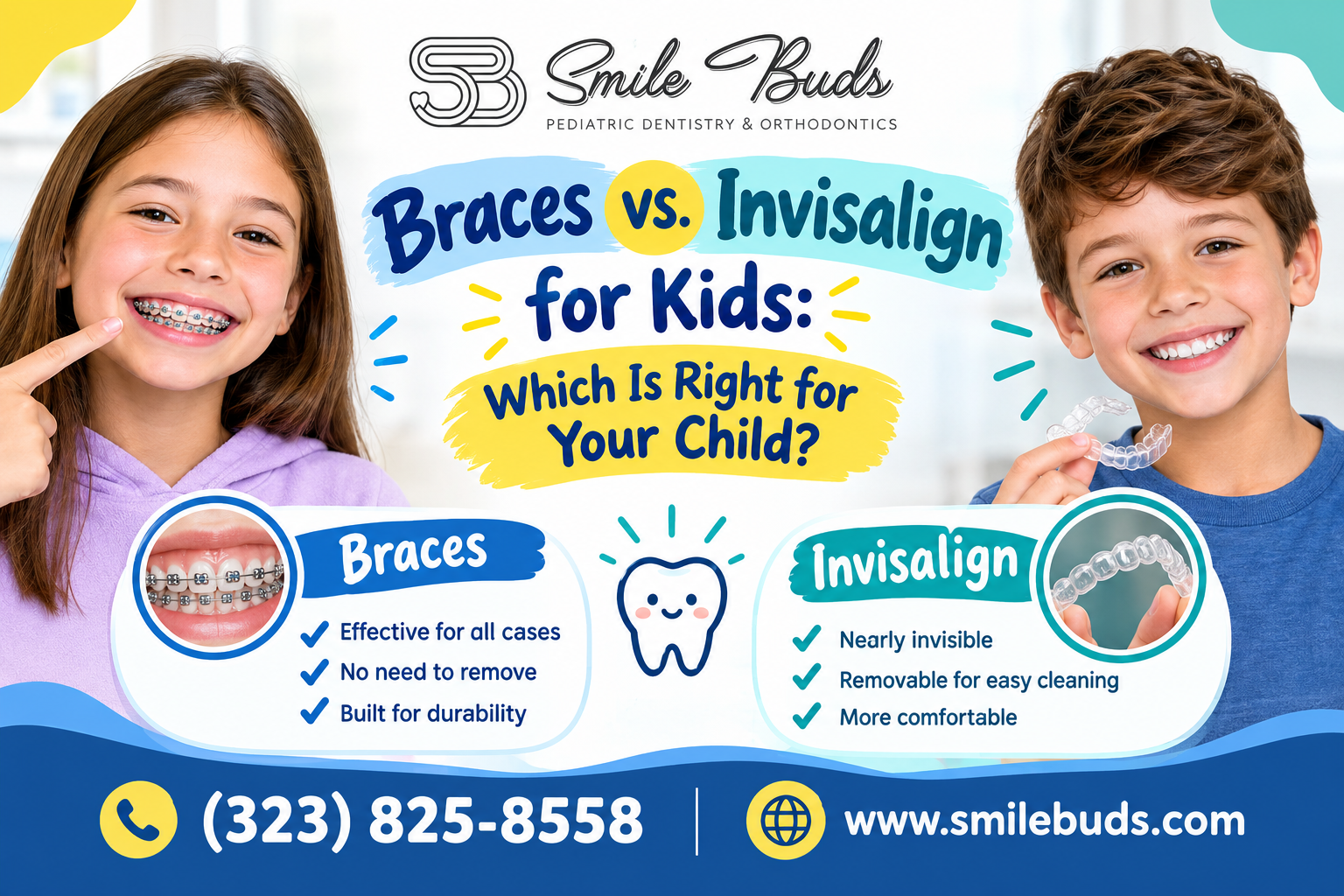
Braces vs. Invisalign for Kids: Which Is Right for Your Child?
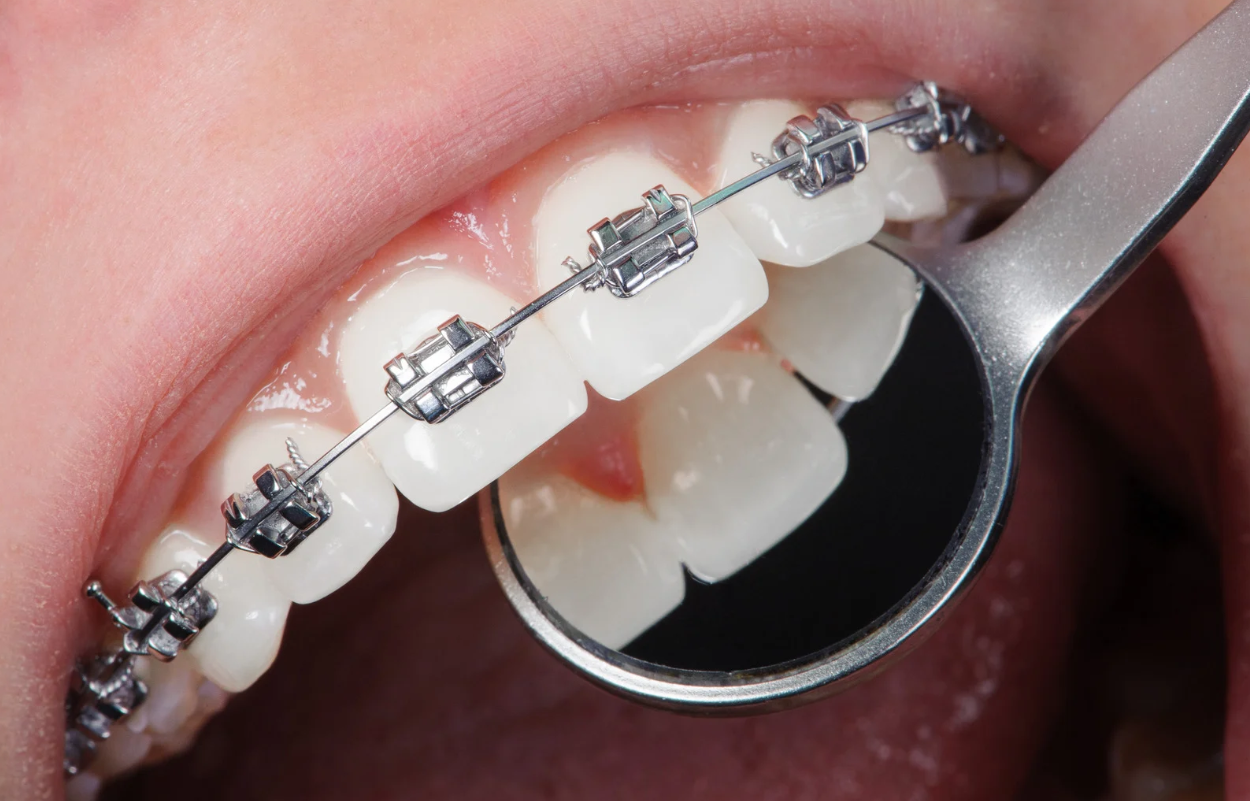
Choosing between braces and Invisalign for your child depends on their dental needs and day-to-day responsibility. Braces work well for complex bite issues since they stay fixed in place. However, Invisalign suits mild to moderate cases where a child can reliably wear removable aligners.
Both options can give your child a straighter, healthier smile. But they work very differently and fit different kinds of kids. In this guide from Smile Buds Clinic, we’ll walk through all possible pros and cons of each option. We will compare costs and help you figure out which path makes the most sense for your child’s unique case.
How Do You Decide Between the Two?
The right choice only depends on your child’s specific alignment issues. Their age and how disciplined they are about following instructions also matter. For serious bite problems or crowding, traditional braces often work better. However, for mild cases, families can choose Invisalign.
Only a personalized evaluation can identify the best option for you because every child’s mouth, habits, and growth pattern are a little different.
Braces for Kids – Pros and Cons
Pros
Traditional braces use metal or ceramic brackets bonded directly to the teeth. Wires connect them and apply steady, continuous pressure over time. They work well for complex alignment issues, major bites, and severe crowding.
Cons
As braces stay fixed in the mouth, they work around the clock. So parents don’t need to remember to ask their kids to wear braces. But wearing them all the time can make teeth cleaning and eating food a little bit challenging for the kid.
Invisalign for Kids – Pros and Cons
Pros
Invisalign for kids uses clear, removable plastic trays that gradually shift teeth into place over a series of custom-made aligners. This treatment is best for mild cases such as moderate crowding, spacing, and simple bite issues.
Cons
The best thing about Invisalign is that the aligners are invisible and easy to remove. That way, children can clean their teeth and eat without restrictions. However, to get the best results, your kids need to wear the Invisalign aligners 20 to 22 hours a day.
Age and Responsibility — Is Your Child Ready for Aligners?
Invisalign can work well for many children. But success depends heavily on whether your child can consistently remember to wear and reinsert their aligners after meals. So, for kids who can not wear them consistently or remember to reinsert them, fixed braces are the best option. However, if you have an older child or pre-teen who can be responsible, you can go with aligners. Before choosing an option, you need to have an honest conversation with your child.
Cost Comparison
Traditional braces and Invisalign for kids fall into fairly similar price ranges overall. However, metal braces are usually a bit more affordable on average. Several factors affect the final price, including case complexity, timeline, and clinic location.
Complex cases, such as severe bite issues, major rotation, or complex jaw problems, take more time to fix. Many dental insurance plans also cover part of orthodontic treatment for children. They typically cover through a lifetime maximum payout rather than an annual renewal.
Cost Breakdown by Treatment Type
Here’s a quick side-by-side look at typical pricing across the most common treatment options for kids.
Treatment Option
Typical Cost Range
Notes
Traditional Metal Braces
$3,000 – $7,000
Most budget-friendly fixed option
Invisalign / Clear Aligners
$3,500 – $8,000
Higher cost due to custom lab fees
Ceramic / Clear Braces
$4,000 – $8,500
Tooth-colored brackets cost more than metal
You should also consider that Invisalign trays can get lost at school or during play. If they do, replacement fees can add up over the course of treatment. Braces are fixed, so they can’t get lost. However, their wires or brackets can loosen or break,k which can add extra to your final cost.
What We Recommend Based on Your Child’s Case
It usually depends on your child’s oral condition. For complex issues such as severe bite problems or complex jaw issues, fixed braces are a good option. If your child is not responsible enough to manage routine care, fixed braces are also a good option.
But if the issues are mild, such as simple bite issues or mild crowding, you can consider Invisalign. You can also consider aligners if your kids are responsible. But the best option depends on your situation and can only be determined after a consultation with your dentist.
FAQ’s
At what age can your child start Invisalign?
Most children can start Invisalign once they have enough permanent teeth in place. A child usually can wear Invisalign around age 7 to 10.
Does Invisalign provide results as effective as braces for kids?
For mild to moderate cases, yes, Invisalign works just as effectively. More complex bite issues generally respond better to traditional braces instead.
What happens if my child doesn’t wear their aligners enough?
Inconsistent wear can slow progress significantly and may extend overall treatment time. Invisalign aligners need 20 to 22 hours of daily wear to work properly.
Is Invisalign more expensive than braces for kids?
Invisalign is usually a little more expensive than traditional metal braces. It involves specialized lab fees and custom plastic manufacturing costs.
Can a child switch from braces to Invisalign mid-treatment?
In some cases, yes, though switching depends on how much progress has already been made and whether the remaining case is suitable for aligners.
Final Thoughts
Now that you have gone through our guide, you are in a better position to choose what suits you. Both options can support your child’s long-term oral health. But the right choice depends on their specific needs and how responsible they are in their daily routines. Braces offer reliable, hands-off correction for complex cases. On the other hand, Invisalign rewards disciplined kids with a discreet, flexible alternative.
If you need help deciding which option suits your child, Smile Buds Clinic is the best choice. You can get their help with a personalized evaluation and honest recommendation. Schedule a Consultation today and take the first confident step toward your child’s best smile.






.jpg)


.jpg)


